When a helicopter lifts off the ground, it’s easy to focus on the spinning blades overhead. But the helicopter main rotor is far more than just that. It’s a sophisticated system where large structural components and tiny precision parts work together in perfect harmony. Every bearing, bushing, and linkage plays a critical role in achieving controlled flight.
Whether you’re involved in helicopter manufacturing, maintenance, or parts procurement, understanding how these systems work helps you make smarter decisions. Let’s take a closer look at the main rotor system and explore why precision manufacturing matters so much in aerospace.
Table of Contents
Key Components of the Helicopter Main Rotor System
The main rotor system consists of several interconnected components. Each one must perform flawlessly under extreme conditions.
Rotor Blades
The rotor blades generate the lift that keeps a helicopter airborne. Modern blades are typically made from aluminum alloys or advanced composite materials. Composites offer excellent strength-to-weight ratios and resist fatigue, making them popular for both civilian and military applications.
Military helicopters often operate in harsh environments like desert sand, salt spray, and extreme temperatures. This means blade materials must withstand significant wear and erosion while maintaining aerodynamic efficiency.
Rotor Hub and Mast
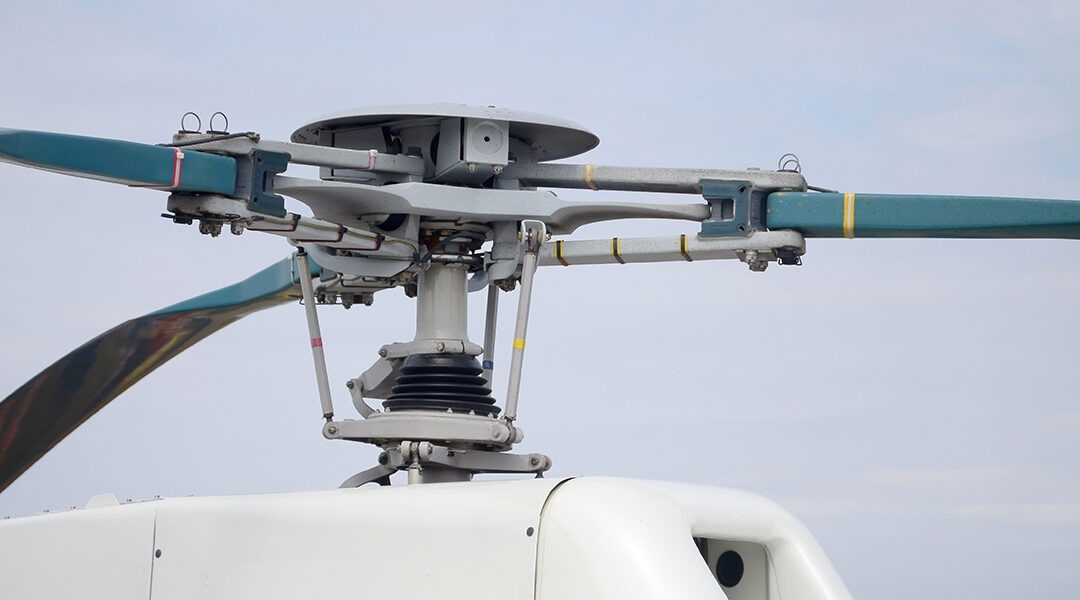
The rotor hub connects the blades to the mast, which is the vertical shaft transmitting power from the helicopter’s transmission. The hub must handle tremendous rotational forces while allowing the blades to move in specific ways depending on the rotor system design.
Swashplate Assembly
The swashplate is one of the most ingenious mechanisms in aviation. This dual-plate assembly translates the pilot’s control inputs into blade pitch changes. When a pilot moves the cyclic or collective controls, the swashplate responds by adjusting blade angles—allowing the helicopter to climb, descend, or change direction.
Pitch Control Links and Control Rods
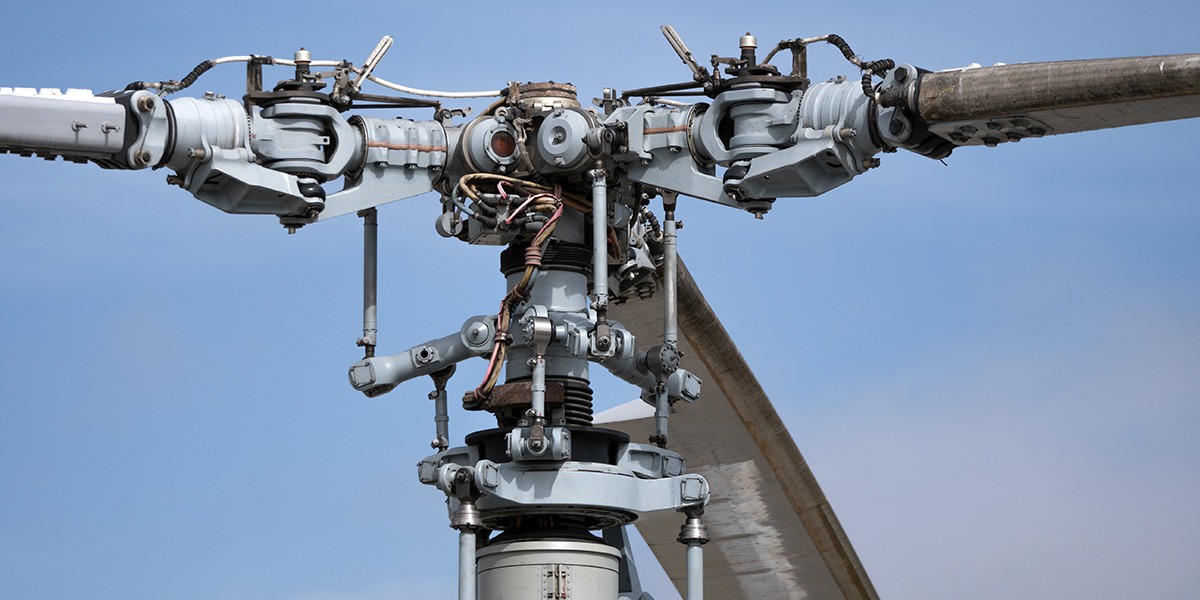
These mechanical linkages connect the swashplate to the blade pitch horns. They’re responsible for transmitting precise movements that change each blade’s angle of attack. Even small imperfections in these components can affect flight control response and overall aircraft handling.
Bearings, Bushings, and Dampers
It’s remarkable how much depends on these small precision parts. Bearings reduce friction and enable smooth movement at critical joints. Bushings provide wear-resistant surfaces between moving components. Different types of dampers absorb vibration and control blade movement.
Common types include:
- Pitch Change Bearings: Allow blades to rotate around their longitudinal axis
- Flapping Hinge Bearings: Enable blades to move up and down
- Lead/Lag Dampers: Control fore-and-aft blade movement
These components may only measure a few inches in diameter, but they must withstand tremendous forces and operate flawlessly for thousands of flight hours.
Types of Helicopter Rotor Systems
Not all main rotors work the same way. The four primary types each have distinct characteristics:
Each design requires specific components manufactured to exact specifications.
The Role of Precision Manufacturing in Main Rotor Components
Why Tolerances Matter
In aerospace manufacturing, tolerances are often measured in thousandths of an inch. The difference between a perfectly manufactured part and a substandard one can mean the difference between smooth operation and dangerous vibration.
Components like pitch change bearings, control linkages, and drive shafts require exacting specifications. When parts spin at high RPMs under heavy loads, even microscopic imperfections create problems. Vibrations can accelerate wear, reduce component life, and compromise safety.
Quality Assurance and Certification Requirements
The aerospace and military industries demand rigorous quality assurance processes. This includes:
- Complete material traceability from raw stock to finished part
- Documentation and verification at every manufacturing step
- Testing to confirm parts meet design specifications
Partnering with certified manufacturers ensures components meet safety and regulatory compliance requirements. There’s simply no room for shortcuts.
The Challenge of Small Precision Parts
Many critical helicopter components are surprisingly small. A pitch change bearing might fit in the palm of your hand, yet it must handle forces that would destroy ordinary hardware. Manufacturing these parts requires specialized precision machining capabilities, meticulous inspection processes, and deep expertise in aerospace materials.
Maintaining Main Rotor Components for Longevity and Safety
Regular Inspection Requirements
Proactive maintenance keeps helicopters flying safely. This includes visual inspections of blades for cracks, erosion, or damage. Technicians also examine bearings, bushings, and dampers for wear or corrosion before safety issues develop

Common Wear Points and Replacement Parts
Certain components are designed as wear items and require periodic replacement:
- Bearings and bushings
- Dampers and seals
- Control rod ends
Using high-quality helicopter repair parts maintains performance and safety margins throughout the aircraft’s service life.
The Cost of Cutting Corners
In helicopter maintenance, there’s no room for compromise. Small savings on cheaper parts never justify the risk to crew, passengers, and aircraft. Quality components are always worth the investment.
Eager to Learn More?
The helicopter main rotor is a remarkable system—a combination of large structural components and small precision parts working together to achieve controlled flight. From the rotor blades generating lift to the tiny bearings enabling smooth pitch changes, every component matters.
Whether you’re involved in helicopter manufacturing, maintenance, or procurement, understanding these systems helps you make better decisions and appreciate the engineering excellence that keeps these aircraft flying safely.
For more insights into helicopter components and precision aerospace manufacturing, visit Bertrand Products.